Last updated: September 2026
Some links on this site may be affiliate links. If you buy through them, we may earn a commission at no extra cost to you.
Small rental kitchens have shallow cabinets, a sink cabinet full of pipes, no real pantry, and leases that forbid drilling. This guide maps a zone-by-zone, no-drill system for a weekend reset that respects deposits and move-out.
Constraints: no drill · deposit-safe · pipe-friendly under-sink · no built-in pantry · shallow cabinets · move-out ready
Deposit-safe organization
| Prefer | Avoid unless allowed |
|---|---|
| Freestanding shelves, pull-outs, bins, carts | Screw-in rails |
| Snug tension rods and lift-off hangers | Permanent brackets |
| Magnetic fridge storage and mats | Wall anchors |
Treat weight limits as real and remove everyth
Zone 2 — Pantry / no-pantry
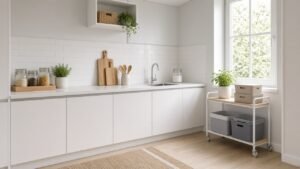
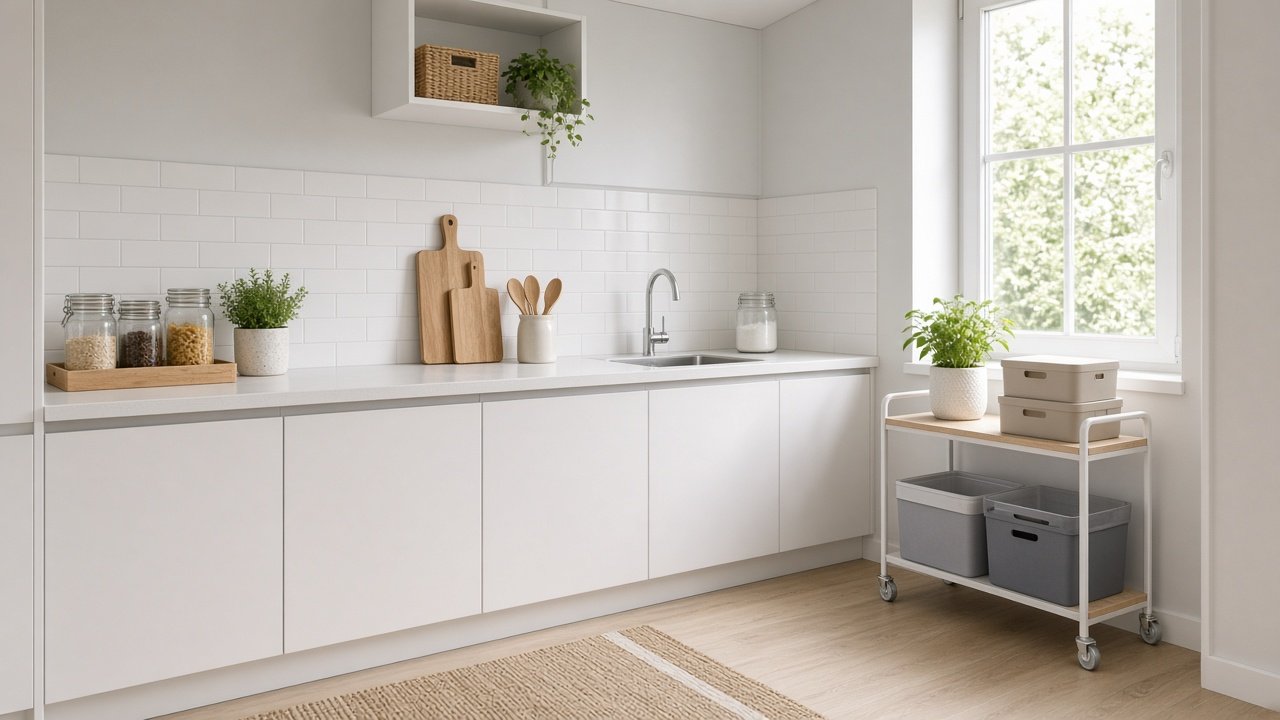
Choose one primary dry-goods home: the deepest accessible cabinet or a measured slim cart. Decant only high-churn staples. Use shelf risers for cans, turntables for corners, and clear bins as pull-out drawers. A lift-off over-door rack can hold wraps or snacks when clearance allows. In shared flats, give each person a bin or shelf strip.
Zone 3 — Drawers
Measure the interior width and depth. Use one expandable utensil tray and a shallow spice insert only if it fits. A small caddy beats a junk drawer full of loose tools. Prefer modular trays that pack for move-out.
Zone 4 — Counters
Define one landing strip outside the cook zone
Weekend implementation order
1) Measure
- Under-sink W × D × H front and back; note trap, disposal, and valves.
- Primary dry-goods cabinet W × D × H and door type.
- Utensil drawer interior W × D.
- Fridge–wall gap and door clearances.
2) Declutter
Remove expired food, duplicates, unused cleaners, and gadgets untouched for 90 days. In shared housing, agree on personal versus shared zones first.
3) Zone
- Cleaners → under-sink only
- Dry goods → one pantry/no-pantry home
- Utensils → one drawer
- Daily cooking tools → one counter footprint
- Spices → drawer or magnetic fridge side
4) Buy
Shop one zone at a time with measurements. Prefer freestanding, expandable, tension, magnetic, and over-door pieces that nest or pack flat. Use a budget ladder: under $25 for mats/rods, $25–50 for a zone hero, and more only for a measured cart.
5) Install
Studio vs galley vs shared flat
| Kitchen | First weekend focus | Skip for now |
|---|---|---|
| Studio | Under-sink mat, tension rod, dry-goods bins, clear counter | Large carts you cannot turn |
| Galley | Pull-out or shelf, drawer tray, slim vertical storage | Over-door gear that scrapes |
| Shared flat | Labeled caddies, personal dry-goods bins, fridge rules | Unlabeled community drawers |
FAQ
Is organization for renters different from homeowners?
Yes. Renters optimize for reversible storage: freestanding, tension, magnetic, over-door, and liners. Homeowners can screw into cabinets and build pantries.
How do I organize a kitchen with no pantry?
Choose one primary dry-goods home, add risers, turntables, and clear pull-bins, and limit counter canisters.
What under-sink organizer works with pipes?
Often an L-shaped caddy, dual side bins, or an open-back pull-out—not a solid center deck. Measure around the trap and disposal.
Can I organize without drilling?
What should I buy first on a tight budget?
Start under-sink: a waterproof mat, then a tension rod for spray bottles or one measured expandable/L-shaped organizer. Clear counters by decluttering before buying countertop products.
Will landlords allow over-door and tension storage?
Most leases care about holes and damage, not freestanding gear. Avoid crushing cabinet sides with rods, protect finishes with mats, and confirm anything adhesive. Choose lift-off and freestanding first.
Next steps
- Measure the under-sink cabinet and dry-goods home.
- Run the weekend order on Zones 1–2.
- Shop pipe-friendly under-sink categories when ready.
Calm counters, usable storage, and gear that moves with you: that is the whole point.
Usually yes: mats, expandable shelves, pull-outs, bins, tension rods, over-door hangers, and magnetic fridge-side storage. Use adhesives cautiously.
Organization or organisation?
This page uses US English. UK, AU, and CA readers searching organiser, organisation, flat, or cupboard will find the same advice here.
How long should a weekend reset take?
A focused Measure → Declutter → Zone → Buy → Install pass on one or two zones fits in an afternoon. Whole-kitchen resets may need a second session.
Mat → shelf/caddy → hangers → bins → labels. Wipe, photograph the after for your move-out file, and stop before overbuying.
Soft shopping map
| Zone | What you need |
|---|---|
| Under-sink | Pipe-friendly organizers, mats, tension rods |
| Pantry/no pantry | Bins, risers, turntables, carts, over-door gear |
| Doors/vertical | No-drill storage |
| Whole weekend | Ordered kit and budget stack |
. Keep daily tools in one tight cluster and store appliances that do not earn weekly use. Use folding racks or slim drying mats that collapse. After the reset, see more open counter than organizer.
Zone 5 — Fridge
Use clear bins for leftovers, sauces, and snacks. Keep drinks on the door, use magnetic spice storage on the fridge side, and date leftovers for a weekly purge.
Zone 6 — Doors and vertical
Prefer lift-off over-cabinet racks, over-door organizers with clearance, clip-on under-shelf baskets, and a slim rolling cart only after measuring the gap. Measure twice; hang once.
ing carefully at move-out.
The six kitchen zones
Reset one zone at a time. Order: Under-sink → Pantry/no-pantry → Drawers → Counters → Fridge → Doors/vertical.
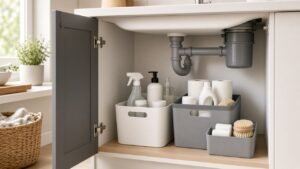
Zone 1 — Under-sink
Map the trap and disposal, lay a waterproof mat, then choose one hero: expandable shelf, open-back pull-out, or L-shaped caddy. Keep valves reachable. Measure width, depth, and height front and back before buying.
See our under-sink organizer guide for category comparisons.