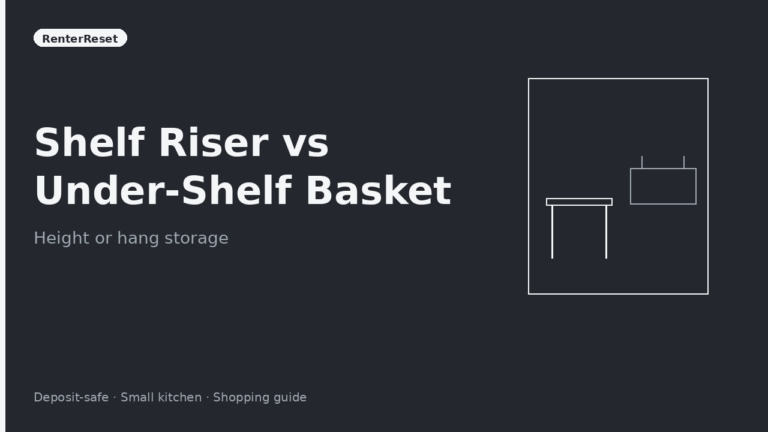
Shelf riser vs under shelf basket: risers add height...
Pantry
Apartment pantries are rarely pantries. More often they are a single deep cabinet, a broom closet, or a freestanding rack you wheeled in because the kitchen had nowhere for cereal. The guides in this category assume that reality: shallow depth, one awkward corner, a door that barely clears, and a landlord who notices holes in the walls.
You will find no-drill pantry systems, stackable bins for deep shelves, airtight canisters that earn their footprint, over-the-door slim racks, snack and packet organizers, and oil or vinegar corrals that keep bottles from migrating onto the stove. Lazy susans that live in pantry corners live here too when the turntable is doing pantry work rather than spice-rack work.
Start with the pantry hub if you need a whole-system pass. Use a support guide when you already know you need a can dispenser, chip rack, or pet-food container and just need fit notes. Measure shelf depth, usable height under the next shelf, and door clearance before you order anything that claims to be slim on the product page.
When the pantry is also the broom closet, prioritize sealed food storage and a single pull zone for daily snacks so cleaning gear and cereal do not share a bin. Label only what you refill; a forest of labels does not fix a deep shelf you cannot see into from the doorway.
If you are choosing between more containers and fewer open bags, containers usually win for rentals—less spill risk, cleaner move-out, and less mystery flour at the back of the shelf. Buy one matching set for staples first; expand only after those containers stay full for a month.New to the site? Pick one constraint—no drill, tiny counter, or pipes under the sink—and follow that cluster before expanding into adjacent rooms. Then come back for adjacent zones once the first cluster feels settled.
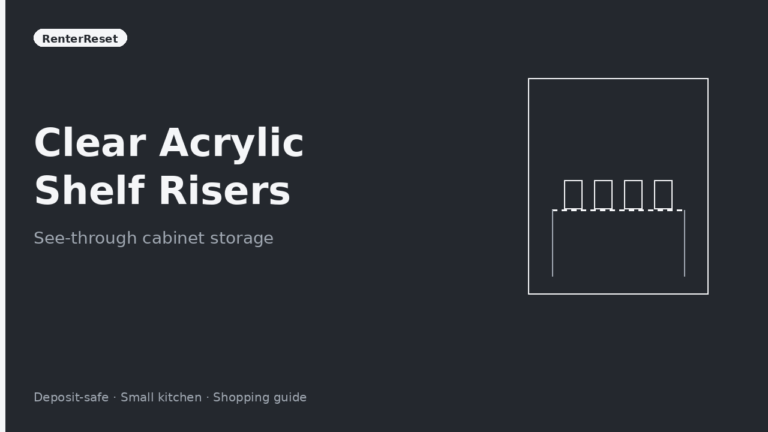
Clear acrylic shelf riser kitchen cabinet picks: when see-through...
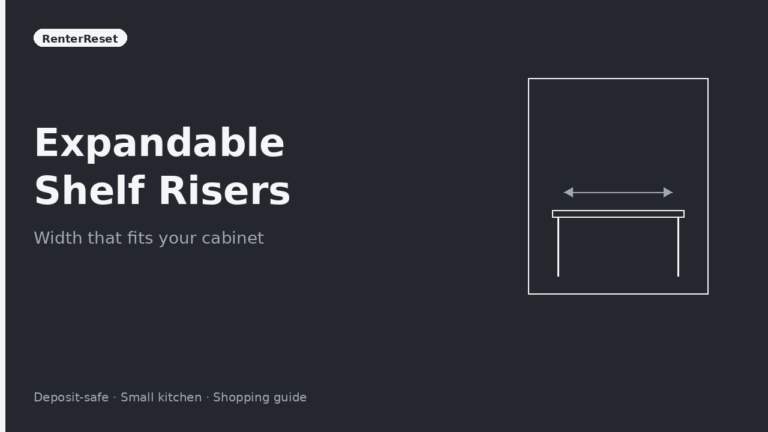
Expandable shelf riser small cabinet picks: match the width...

Heavy duty lazy susan for canned goods: check load...
Lazy susan with removable bins pantry picks: lift-out bin...
Woven pantry baskets small pantry apartment picks: shelf W×D×H,...

Pantry pet food storage container apartment picks: bag size...
Pantry zip bag organizer vertical apartment picks: box sizes,...
Pantry seasoning packet organizer apartment picks: packet bins vs...

Pantry flour sugar canister airtight apartment picks: capacity for...