Last updated: October 2026
This page contains affiliate links. If you buy through them, we may earn a commission at no extra cost to you. As an Amazon Associate I earn from qualifying purchases.
Most cabinet organizers that “almost fit” fail on one number you never wrote down: width at the hinges, not the box; depth minus the door; height with the face-frame lip counted. Learning how to measure kitchen cabinets for organizers is the single skill that saves return shipping in a rental.
This is the cluster’s measure guide. Tape points, a simple table to copy into your notes app, and the freestanding tools that forgive small mistakes. Nothing here assumes you can drill shelf pins or cut a face frame.
Quick answer / top pick: Open the door fully, measure width at the hinge plate, depth to the back wall minus about 1 inch, and shelf-to-shelf height. Write those three numbers on a strip of tape on the door. Shop only against those numbers.
Constraints we optimize for: opening W at hinges · usable D to back/pipes · H shelf-to-shelf · face-frame lip · door swing · shelf thickness for clips
Related: shelf risers for small kitchen cabinets · add a shelf without drilling · the under-$50 kitchen organization weekend kit.
What each measurement unlocks
| Number | How to take it | What it decides |
|---|---|---|
| Opening width | Hinge plate to opposite wall, door open | Max frame / riser / stacker width |
| Usable depth | Front shelf edge to back wall or pipes, −1 in | Max organizer depth so the door closes |
| Shelf gap height | Shelf floor to underside above | Riser / stacker / basket height |
| Face-frame lip | Thickness of the frame around the opening | Whether a sliding basket clears the lip |
| Shelf thickness | Top to underside of the shelf board | Clip-on under-shelf basket fit |
The write-down template
- Width at the hinges: open the door fully. Measure inside from the hinge plate (or hinge cups) to the opposite cabinet wall or stile. Do not use the exterior cabinet width.
- Usable depth: front edge of the shelf to the back wall. Subtract about 1 inch for door clearance and hinge cups. Around pipes under the sink, measure to the pipe, not through it.
- Shelf-to-shelf height: floor of one shelf to the underside of the next. For risers, subtract your tallest under-item plus about an inch of finger room.
- Face-frame lip: if the cabinet has a frame around the opening, measure how high that lip sits above the shelf. Sliding baskets must clear it.
- Door swing and diagonal: for tall inserts, check you can tilt the piece through the opening. The diagonal of the opening is often the real limit.
- Shelf thickness: for clip-on under-shelf baskets, measure the shelf board. Compare to the listing’s max thickness.
Copy-paste measure template
Cabinet name / location: ____ Opening width at hinges: ____ in Usable depth (edge to back − 1 in): ____ in Shelf gap height: ____ in Face-frame lip height: ____ in Shelf thickness: ____ in Tallest item under a riser: ____ in Notes (pipes, center stile, wire shelf): ____
Shop only against the first three numbers unless you are buying a clip basket or a sliding frame.
Face-frame vs frameless rentals
Face-frame cabinets have a wooden border around the opening. That border eats width and creates a lip sliding baskets must clear. Frameless (European-style) cabinets open almost to the full box width, so organizers can be wider—but hinge cups still intrude. Always measure the clear opening, not the style name on a listing.
Pair from the RenterReset shop
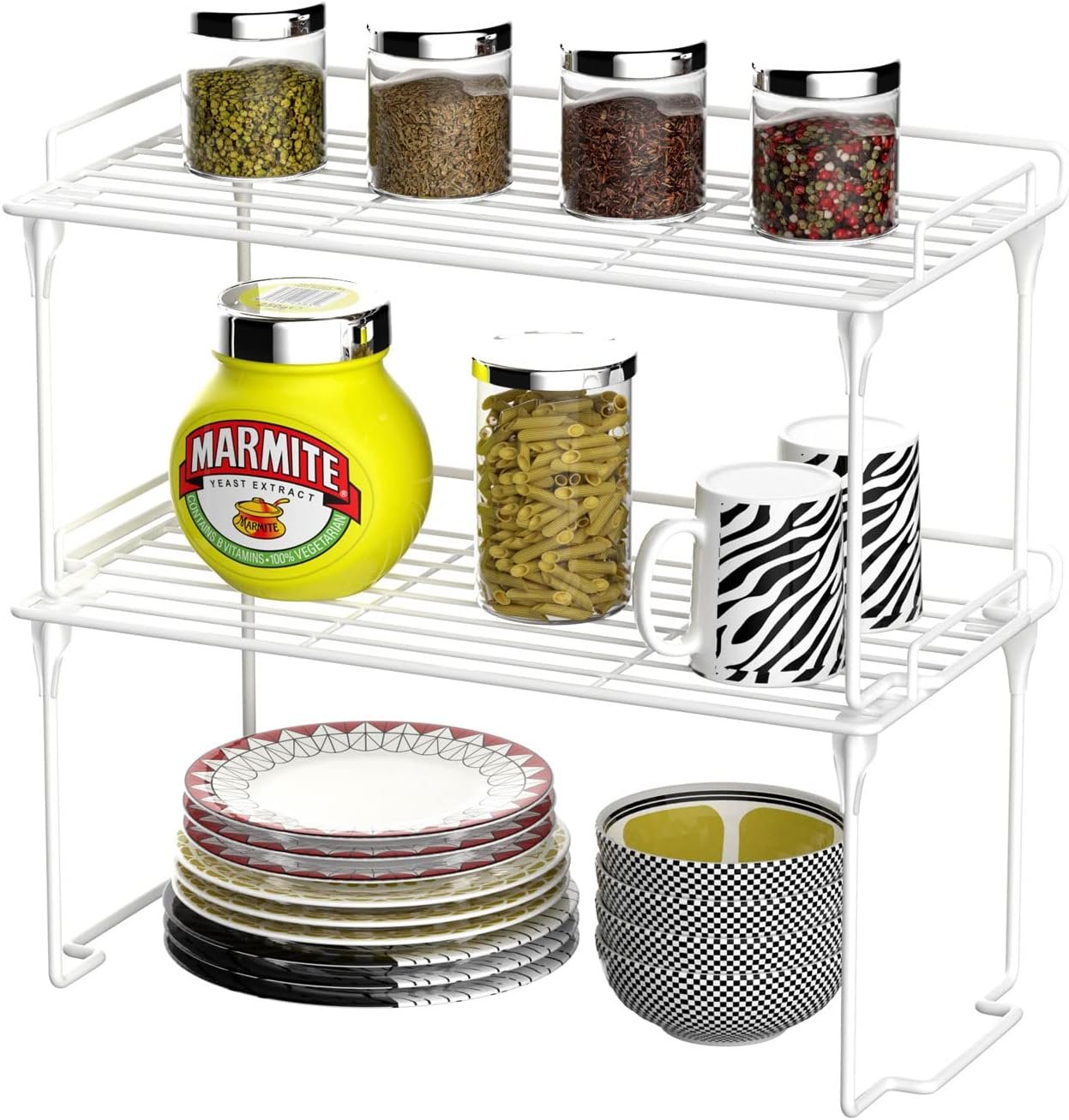
Stackable wire shelf risers (2-pack)
Doubles cabinet height for cans and plates—freestanding, no hardware.
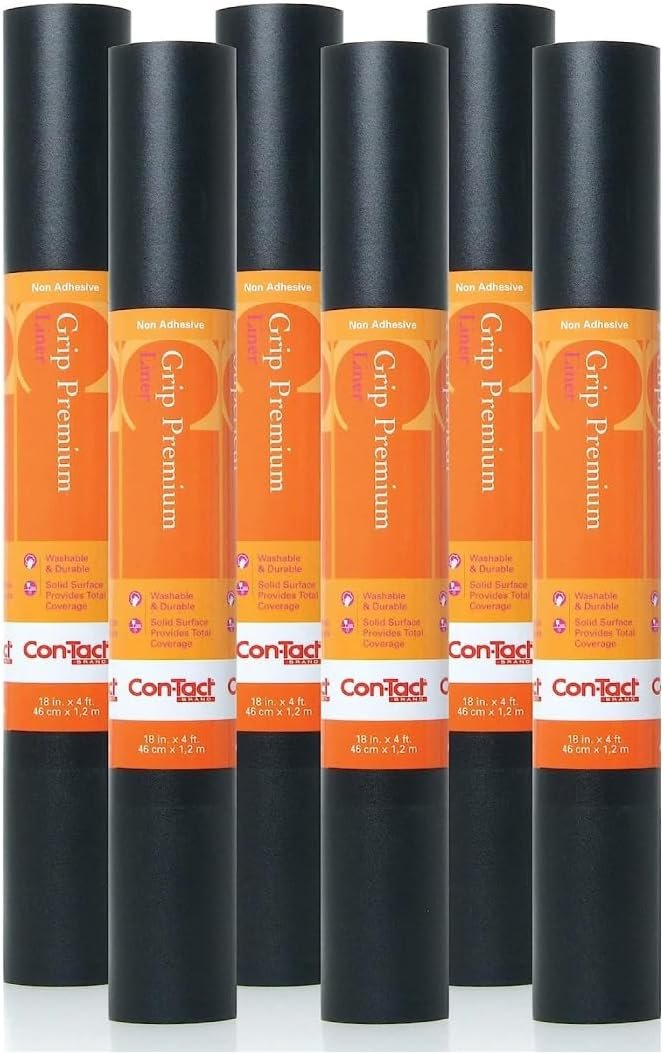
Con-Tact Grip non-adhesive liner
Premium grip liner stays put without sticky residue—landlord-friendly drawers.
Write these numbers down before you buy
- Write width, depth and height on tape on the door before you browse.
- Width = hinges, not the outside of the box.
- Depth = shelf minus about 1 inch.
- Note pipes, stiles and wire shelves in the same note.
- Cardboard mock-up for anything expensive or awkward.
- Freestanding gear only unless you have written landlord approval.
Tools that make measuring stick
1) Tape and write-down helpers
Who it’s for: Anyone measuring more than one cabinet this weekend.
Price band: roughly $5-20
Pros: A stiff tape and a bright marker beat guessing twice. Cons: Easy to skip and regret.
Fit notes: A 16-ft tape covers tall uppers; painter’s tape holds your numbers on the door.
Shop: steel tape measure 16 foot · painters tape for labeling
2) Shelf risers once you have the numbers
Who it’s for: Cabinets with empty air above short items.
Price band: roughly $15-30
Pros: Immediate second level; freestanding. Cons: Wrong size is a return if you skipped measuring.
Fit notes: Depth ≈ shelf − 1 in; width under opening width at hinges.
Shop: stackable wire shelf risers · expandable cabinet shelf organizer
3) Liners cut to your depth
Who it’s for: Laminate and wire shelves that make organizers skate.
Price band: roughly $10-25
Pros: Stops sliding; protects the finish; peels out at move-out. Cons: Needs a straight cut.
Fit notes: Cut liner to organizer footprint, a little short of the front edge.
Shop: non-adhesive grip shelf liner · non slip shelf liner roll
4) Bins for the “back half” problem
Who it’s for: Deep cabinets after you know usable depth.
Price band: roughly $15-30
Pros: Handles beat lost items at the back. Cons: Bin depth must still clear the door.
Fit notes: Bin depth ≤ usable depth; leave finger room at the front.
Shop: clear pantry bins · clear bins with handles
FAQ
What is the most important cabinet measurement for organizers? Opening width at the hinges with the door fully open. Most “too wide” returns fail this number.
How much depth clearance does a cabinet organizer need? About 1 inch less than the shelf depth so the door closes and hinge cups do not rub.
Do I measure differently for under-shelf baskets? Yes. Add shelf thickness and the clear height under the shelf. Clip baskets list a max thickness.
Next in this cluster
- shelf risers for small kitchen cabinets (cluster guide)
- shelf riser vs under-shelf basket (previous guide)
- organize deep kitchen cabinets without drilling (next guide)
- the under-$50 kitchen organization weekend kit
- Shop pantry picks
Bottom line
Write width at the hinges, usable depth and shelf gap on the door, then shop. For adding a level, see add a shelf without drilling and the shelf risers cluster guide. A cheap starter set is in the under-$50 kitchen organization weekend kit. Next: organize deep kitchen cabinets without drilling.