Last updated: September 2026
This page contains affiliate links. If you buy through them, we may earn a commission at no extra cost to you. As an Amazon Associate I earn from qualifying purchases.
Most rental “pantries” are not pantries at all. You get a single shallow cupboard, a fridge top, a gap beside the fridge, or a shared shelf in a hallway closet—and the lease says no drilling. Dumping bags into that space is how dry goods expire, cans disappear, and move-out day turns into a cardboard avalanche.
This guide is a no-drill pantry organization system for renters: freestanding bins, risers, turntables, over-door racks, and slim carts you can pack when you leave. Every pick below is chosen for deposit-safe installs and move-out ready teardown—no screw tracks into landlord wood.
Constraints we optimize for: no drill · deposit-safe · small cabinets · no real pantry · move-out ready
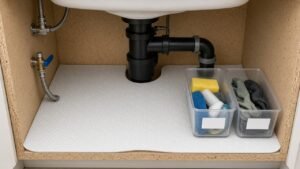
For the wider kitchen map, see our small rental kitchen organization guide. Under the sink is a different problem—use our under-sink organizer guide for pipes and mats.
Quick picks: studio / galley / shared flat
| Your kitchen | Start here | Why |
|---|---|---|
| Studio / micro (no pantry) | Clear bins + lazy Susan + slim cart | Creates zones without a dedicated cupboard |
| Galley with one tall cupboard | Shelf risers + clear bins + labels | Doubles shelf height; stops “can graveyards” |
| Shared flat | Labeled clear bins per person + turntable | Fair zones; less double-buying |
| Budget (under ~$40) | 2–3 clear bins + one riser set | Highest calm-per-dollar |
| One cart (~$40–80) | Slim rolling cart in fridge/wall gap | Instant pantry aisle you can roll away |
How to choose (5-minute renter checklist)
**1. Decide what “pantry” means in your lease unit.** Photograph every dry-goods home: upper cupboard, lower cabinet, fridge top, under-counter gap, hallway shelf. You are organizing those boxes—not a Pinterest walk-in.
2. Measure the usable box. Width, depth, and clear height between shelves. Rental shelves are often fixed and shallower than product photos. Note door swing and any center stile that splits a cupboard in half.
3. Stay freestanding or hang-on. Prefer bins, risers, turntables, tension/over-door racks, and rolling carts. Skip screw-in pantry kits and adhesive “command” shelves for heavy cans unless you know the paint and weight limits.
4. Buy for move-out. Nesting bins, collapsible carts, and risers that stack flat beat custom-cut shelving. Keep the Amazon boxes if you move within a year.
5. Stack spend. Clear bins first (see what you own), then one vertical hero (risers or cart), then a turntable for oils/spices. Resist buying 12 matching jars before you know your real footprint.
Category recommendations
These are the no-drill categories that consistently work in small rental kitchens. Use the fit notes before you click—availability and exact sizes change.
1) Clear stackable pantry bins / open-front bins
Who it’s for: Anyone drowning in chip bags, baking supplies, or roommate snacks.
Price band: Under $25 each; $25–50 for a small set
Pros: Instant zones; clear sides cut double-buying; slide out like a DIY drawer; pack easily at move-out. Cons: Cheap lids crack; oversized bins won’t fit shallow rental shelves; opaque bins hide expired food.
Fit notes: Measure shelf depth first (often 10–12 inches in apartments). Prefer open-front or cutout bins for daily snacks so you are not unstacking towers every morning. Leave ~0.5 inch of side clearance so bins do not scrape particle-board edges.
Shop: clear stackable pantry bins
2) Freestanding shelf risers (cabinet / cupboard)
Who it’s for: One tall shelf full of cans, jars, and short boxes that create a single messy layer.
Price band: Under $25 to ~$35 per pair
Pros: Doubles visible rows with no tools; works in upper or lower cabinets; light and move-out friendly. Cons: Height must clear the shelf above; narrow risers tip if overloaded; not a substitute for a full pantry.
Fit notes: Measure clear height under the next shelf, then subtract the tallest item you will store on the riser deck. Start with one pair on your densest shelf before buying a whole kitchen set. Pair with our shelf risers guide for deeper sizing.
Shop: cabinet shelf risers
3) Lazy Susan / turntable (oils, sauces, spices)
Who it’s for: Corner cabinets, deep upper cupboards, and fridge-door overflow.
Price band: Under $25 (small); $25–40 for larger non-skid trays
Pros: Ends the “reach and knock” tax; freestanding; excellent for shared kitchens. Cons: Needs a roughly round clear zone; cheap plastic warps under heavy bottles; does not fix overcrowding alone.
Fit notes: Measure the diameter of the clear circle, not the full shelf width—hinges and door frames steal space. Use a rimmed turntable for oils. Keep vinegar/soy on the turntable; park bulk rice in a bin elsewhere.
Shop: kitchen lazy Susan turntable
4) Slim rolling cart (gap pantry)
Who it’s for: Studios and galley kitchens with a 4–8 inch gap beside the fridge, stove, or wall.
Price band: $35–80 depending on width and tiers
Pros: Creates a mobile pantry aisle; rolls to the counter for cooking; leaves with you at move-out. Cons: Must measure gap and toe-kick / baseboard; cheap wheels stick on vinyl; top-heavy carts tip if overloaded.
Fit notes: Measure the narrowest point of the gap (often at the baseboard or fridge handle flare), not the visual gap at eye level. Leave ~0.5–1 inch total play. Full comparison: slim rolling carts for apartment kitchens.
Shop: slim rolling utility cart kitchen
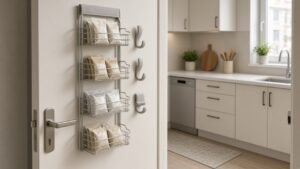
5) Over-door pantry / cupboard rack (hang-on)
Who it’s for: Soft-pack snacks, foil, wraps, and light spice packets when shelf space is gone—only if the door and hinges allow.
Price band: $20–45
Pros: Uses dead door space; usually hang-on (no drill); strong studio pick. Cons: Can scrape paint or block soft-close; weight limits are real; skip on hollow flimsy doors.
Fit notes: Check door thickness and whether the rack hits shelves when closed. Prefer light items only. If the lease is strict about door hardware marks, use bins instead.
Shop: over the door pantry organizer
6) Can racks / tiered can organizers (freestanding)
Who it’s for: Soup-and-bean heavy kitchens where cans hide behind each other.
Price band: Under $25 to ~$35
Pros: FIFO-friendly rows; freestanding; pairs well with risers. Cons: Footprint can be deeper than rental shelves; odd can sizes jam; not needed if you only keep 6–8 cans.
Fit notes: Measure depth and count how many cans you actually rotate. A clear bin with labels often beats a dedicated can rack in micro kitchens.
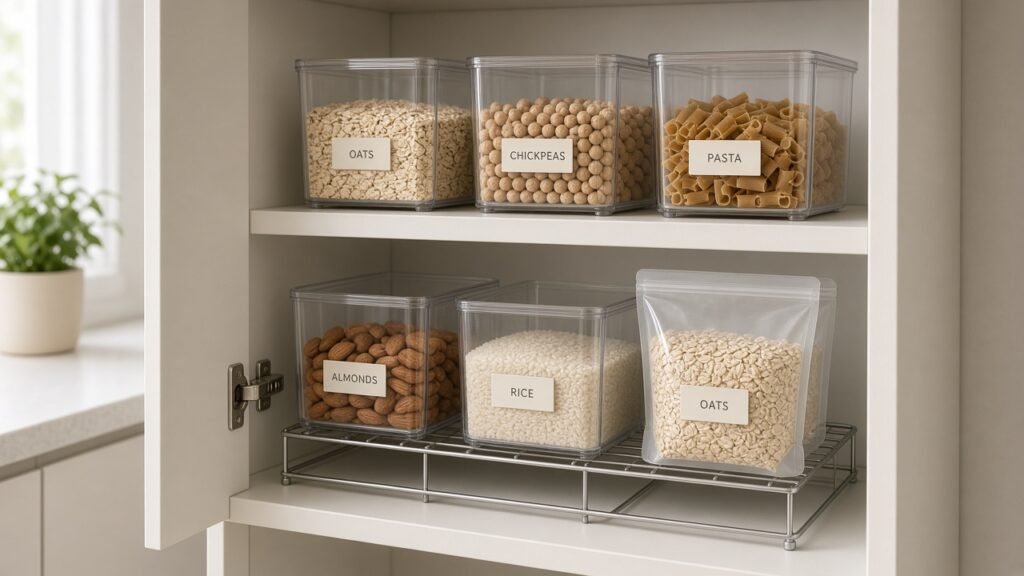
7) Airtight dry-goods containers (selective, not a full jar wall)
Who it’s for: Flour, sugar, rice, oats, coffee—items that spill or attract pests.
Price band: $25–50 for a starter set
Pros: Cleaner shelves; easier scooping; better pest resistance than open bags. Cons: Square containers waste space if you buy the wrong footprint; glass is heavy for frequent movers; matching sets get expensive fast.
Fit notes: Decant only high-use staples. Keep original bags for rare baking spices. Measure shelf height before buying tall canisters—many apartment uppers are shorter than you think.
8) Labels + one “landing” tray (system glue)
Who it’s for: Every renter who re-buys soy sauce.
Price band: Under $15–25
Pros: Makes shared flats fair; speeds weekly reset; costs almost nothing. Cons: Ugly handwriting still works—perfection is optional.
Fit notes: Label zones (breakfast / cooking / snacks / baking), not every jar. A single rimmed tray on the counter becomes the “put away later” landing zone so the cupboard stays intentional.
Comparison table
| Category | Best for | No-drill? | Price band | Move-out |
|---|---|---|---|---|
| Clear stackable bins | Zones / shared flats | Yes | <$25–$50 set | Very high |
| Shelf risers | Can / jar shelves | Yes | <$25–$35 | Very high |
| Lazy Susan | Oils / deep corners | Yes | <$25–$40 | Very high |
| Slim rolling cart | No-pantry gaps | Yes (freestanding) | $35–80 | High |
| Over-door rack | Light snacks / wraps | Hang-on* | $20–45 | High* |
| Can rack | High can volume | Yes | <$25–$35 | High |
| Airtight containers | Staples only | Yes | $25–50 | High |
| Labels + tray | System glue | Yes | <$25 | Very high |
\*Only if door-safe for your lease and hinges.
Build order: deposit-safe pantry reset (60–90 min)
- Empty every dry-goods home onto the counter. Trash expired food; donate duplicates you will not finish before move-out.
- Wipe shelves; note any sticky liner you can peel without damage.
- Place shelf risers on the densest can/jar shelf.
- Assign clear bins by zone (breakfast, cooking, snacks, baking). One bin per roommate if you share.
- Add a lazy Susan for oils and tall sauces in the awkward corner or deep upper.
- If you have a measured gap, roll in a slim cart for overflow and bulk.
- Optional: hang an over-door rack only for light items after a door-clearance check.
- Label zones. Photo the setup for your move-out inventory.
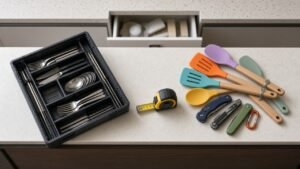
Then protect wet zones with a proper under-sink system, and keep drawer chaos in check with drawer organizers for tiny rental drawers.
Mistakes to skip
| Mistake | Do this instead |
|---|---|
| Buying 20 matching jars first | Bins + risers first; jars only for staples you use weekly |
| Full-width organizer that ignores the center stile | Two narrow bins, one per bay |
| Overloading an over-door rack | Light snacks only—or skip the door entirely |
| Cart bought for “eye-level gap” | Measure the narrowest point including baseboard |
| Opaque bins in a shared flat | Clear sides + name labels |
| Drilling a pantry kit for a one-year lease | Freestanding stack you can pack |
FAQ
What is the best pantry organization for renters with no drill?
Start with clear bins + one shelf riser set + a lazy Susan. Add a slim rolling cart if you have a measured fridge/wall gap. That stack covers most studio and galley kitchens without touching landlord wood.
How do I organize a kitchen with no pantry at all?
Treat the fridge gap, one upper cupboard, and a rolling cart as your pantry. Zone with bins, go vertical with risers, and keep oils on a turntable. See also our no-drill small rental kitchen guide.
Are over-the-door pantry organizers safe for rentals?
Often yes if they hang without screws and stay under the weight limit—but they can mark paint or fight soft-close hinges. If your lease is strict, keep storage freestanding inside the cupboard.
What size clear bins fit apartment pantry shelves?
Many rental shelves are about 10–12 inches deep. Measure depth and the clear width between walls or the center stile before ordering. When unsure, buy one bin first.
Do these tips work for UK/AU cupboards and flats?
Yes—same categories. This page uses US spelling (organizer / apartment / cabinet). UK/AU searches often use organiser, organisation, cupboard, and flat. Use local storefronts and centimetre measurements; the deposit-safe rules are identical.
Should I buy a slim cart or more bins?
If you have a real 4–8 inch gap, a cart unlocks more capacity than another bin tower. If every gap is blocked, spend on bins and risers first—see slim rolling carts.