
Last updated: October 2026
This page contains affiliate links. If you buy through them, we may earn a commission at no extra cost to you. As an Amazon Associate I earn from qualifying purchases.
Coffee mugs are the quiet space hogs of a small rental cabinet. One shelf of them stacked two-high is a tipping hazard; one shelf of them single-file wastes the air above the rim. A mug stacker organizer for a cabinet shelf is the middle path: a freestanding rack that stacks mugs or glasses without drilling hooks into the underside of the shelf.
The buying trap is mixing mug trees, stemware racks and shelf risers as if they were the same thing. They are not. Trees stand on the counter. Stemware hangers often need screws. Shelf risers give you a second level for anything, including mugs. This guide is for freestanding stackers and risers that live inside the cabinet and leave with you.
Quick answer / top pick: A freestanding wire or acrylic mug stacker whose height is under your shelf gap minus about an inch, with a footprint about 1 inch shallower than the shelf. Everyday mugs on it; tall travel mugs standing beside it.
Constraints we optimize for: mug height ×2 + 1 in vs shelf gap · stacker footprint vs shelf depth · handle orientation · glasses vs mugs · freestanding only
Related: shelf risers for small kitchen cabinets · freestanding mug trees for the countertop · clear acrylic shelf risers.
Quick picks by what you store
| What you have | Use this | Why |
|---|---|---|
| Everyday coffee mugs, 2-high | Wire mug stacker or short shelf riser | Doubles the shelf without stacking on the rim |
| Stemless glasses and tumblers | Clear acrylic stacker or riser | Flat top keeps glass upright; see-through looks clean |
| Stemware you rarely use | Freestanding stemware rack (no screws) | Skip under-shelf hangers that need drilling |
| Mixed mugs and bowls | Shelf riser, mugs on top | One riser does both; bowls go under if they fit |
| Counter space free, cabinet full | Mug tree on the counter instead | See the countertop mug-tree guide |
Mug height, shelf gap, and stacker footprint
- Shelf gap: floor of the shelf to the underside of the shelf above. Stand your tallest mug, double its height, add about an inch. If that number is bigger than the gap, a two-high stacker will not fit.
- Mug height and handle: measure rim to base, and note whether handles stick out wider than the body. Stackers with vertical posts need handle clearance between posts.
- Footprint vs depth: uppers are commonly about 12 inches deep outside. Pick a stacker about 1 inch shallower than your shelf so the door closes and hinge cups clear.
- Width at the hinges: with the door open, measure hinge plate to opposite wall. That is the max stacker width, not the cabinet box.
Mug stacker vs shelf riser vs mug tree
A mug stacker is built for cups: posts, slots or tiers sized to mug rims. A shelf riser is a general second level; mugs sit on top, plates or bowls under it. A mug tree stands on the counter and is better when the cabinet is already packed.
In a rental upper, I usually start with a short riser or a wire stacker inside the cabinet. The tree is the overflow plan when you have three people and twelve mugs.
Glasses and stemware without drilling
Under-shelf stemware hangers that screw into the cabinet floor are a hard no in a lease. Look for freestanding stemware racks that sit on the shelf, or store stemware in a bin with a soft liner. Stemless tumblers behave like short mugs: a clear acrylic riser keeps them upright and visible.
Pair from the RenterReset shop
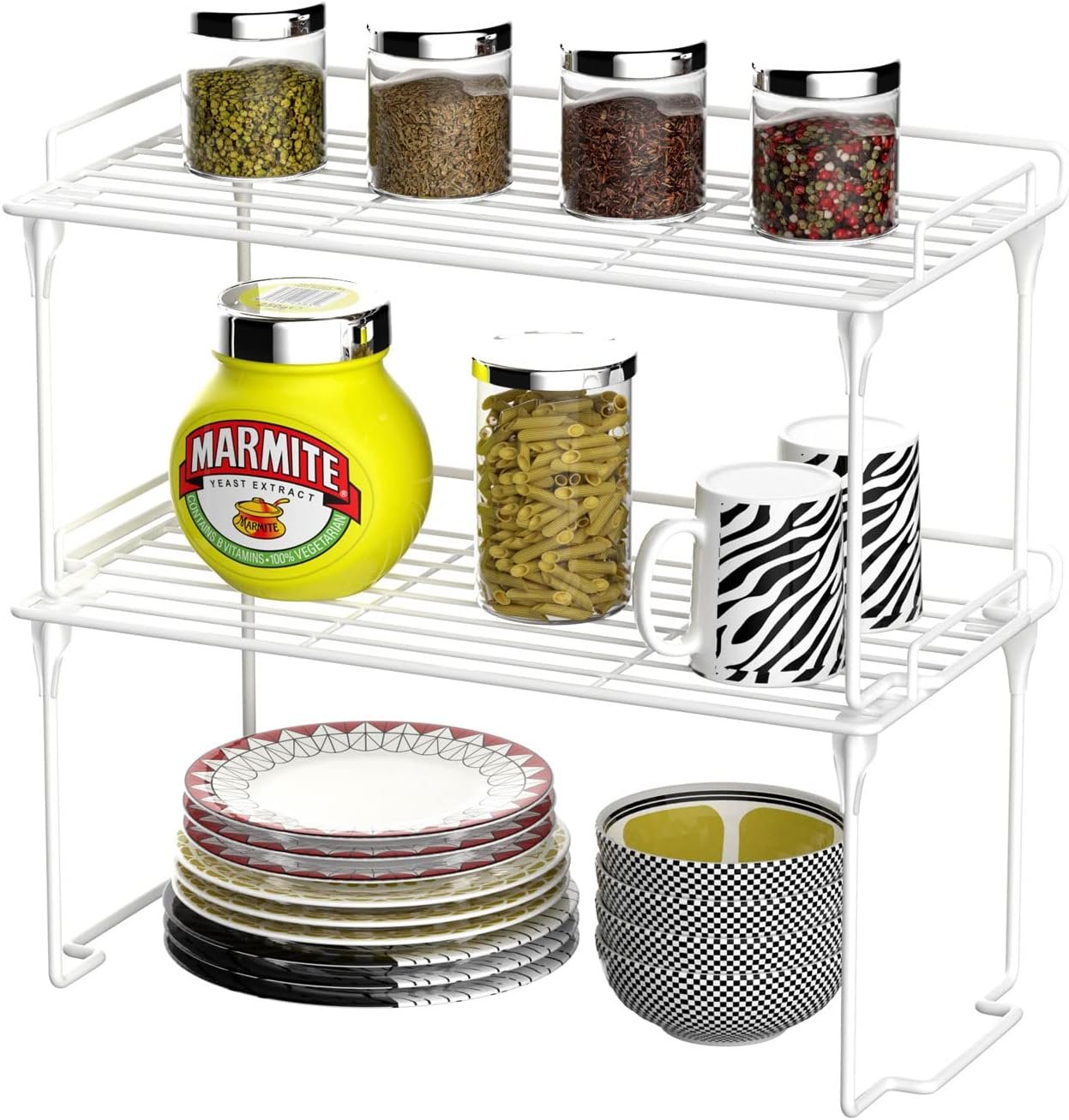
Stackable wire shelf risers (2-pack)
Doubles cabinet height for cans and plates—freestanding, no hardware.
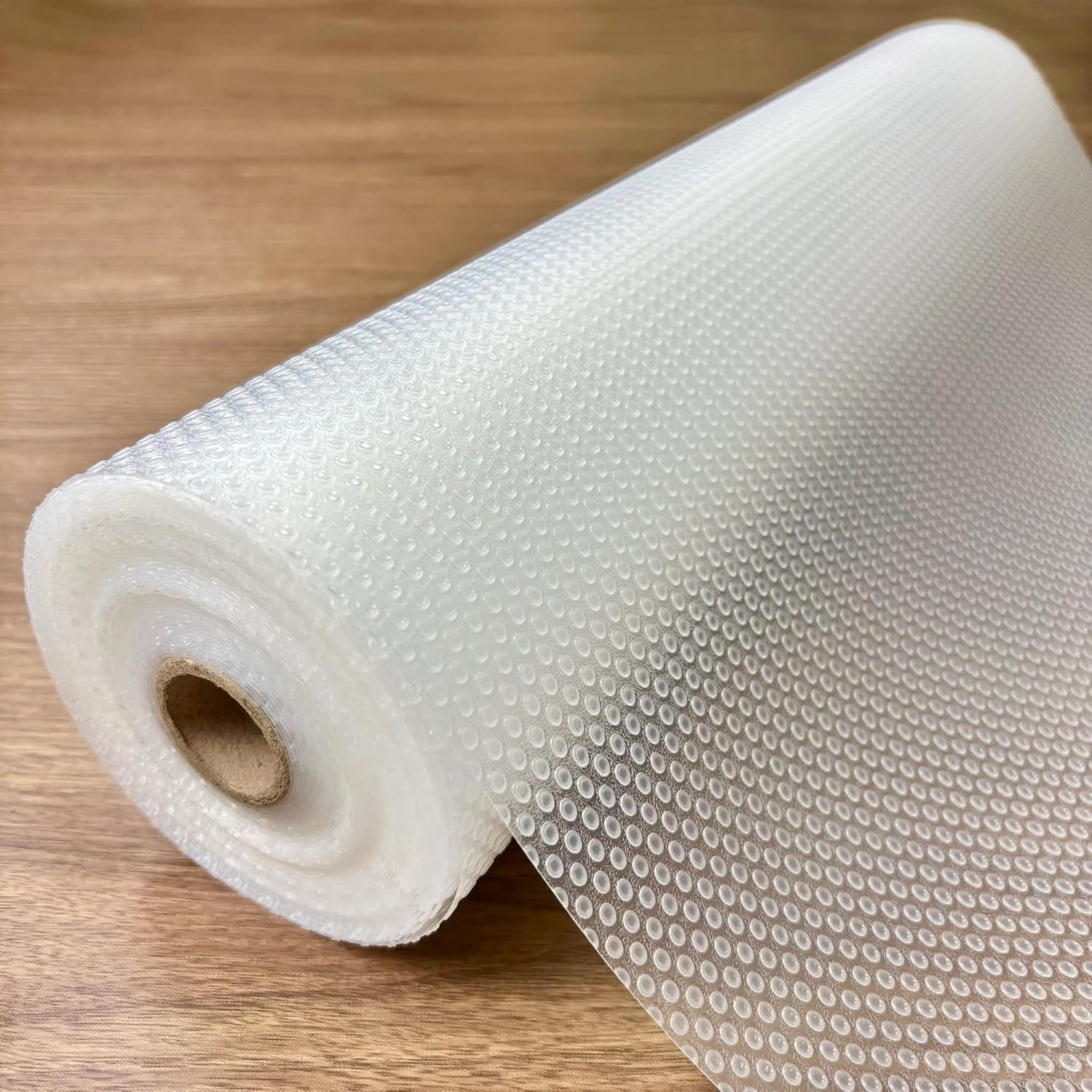
Non-slip shelf liner roll
Cushion plates and stop sliding pans—cut to fit, peel out at move-out.
Before you put a mug stacker in
- Measure shelf gap against mug height ×2 + 1 inch before you buy.
- Freestanding only. No screw-in under-shelf hangers, no adhesive cup hooks on the cabinet floor.
- Heaviest mugs on the bottom level; light ones up top.
- Leave the hinge side clear so the door does not clip a handle.
- Liner under the stacker so it does not skate when you pull a mug.
- Tall travel mugs stand beside the stacker, not on it.
Mug and glass organizers by type
1) Wire mug stackers for cabinets
Who it’s for: Everyday coffee mugs in upper or pantry cabinets.
Price band: roughly $12-28
Pros: Designed for mug rims; cheap; lifts out whole. Cons: Handles can catch posts; not for oversized travel mugs.
Fit notes: Check the listed height against your shelf gap and leave about an inch of lift room.
Shop: wire mug stacker for cabinets · metal mug rack for shelves
2) Clear acrylic mug and glass organizers
Who it’s for: Tumblers, stemless glasses and open shelves.
Price band: roughly $15-35
Pros: See-through; flat surfaces keep glass upright. Cons: Can scratch; long thin spans sag under heavy ceramic.
Fit notes: Short spans beat one long panel; keep heavy stoneware on the shelf floor.
Shop: clear acrylic mug organizer · acrylic drinkware shelf riser
3) Shelf risers used as mug shelves
Who it’s for: Mixed cabinets where mugs share space with bowls or cans.
Price band: roughly $15-30
Pros: One riser does mugs on top and something else underneath. Cons: Not mug-shaped; mugs can slide if the top is slick.
Fit notes: Pair with a cut of grip liner on the top surface.
Shop: stackable wire shelf risers · kitchen shelf riser for mugs
4) Liners and countertop overflow
Who it’s for: Anyone whose stacker slides, or whose cabinet is already full.
Price band: roughly $10-30
Pros: Liner stops skating; a countertop tree frees the cabinet. Cons: Tree uses counter space.
Fit notes: Cut liner to the stacker footprint; park the tree away from the stove splash zone.
Shop: non slip shelf liner · freestanding mug tree countertop
FAQ
Will a mug stacker fit in a 12-inch upper cabinet? Usually yes if the footprint is about 1 inch shallower than your shelf and the height clears your doubled mug height plus an inch. Measure the gap first.
Mug stacker or shelf riser? A stacker if you only store mugs and want mug-shaped slots. A riser if the shelf also holds bowls, cans or glasses underneath.
Are under-shelf mug hooks okay in a rental? Only the clip-on styles that need no screws and leave no residue. Screw-in under-shelf hangers put holes in the cabinet floor.
Next in this cluster
- shelf risers for small kitchen cabinets (cluster guide)
- clear acrylic shelf risers (previous guide)
- shelf riser vs under-shelf basket (next guide)
- freestanding mug trees for the countertop
- Shop pantry picks
Bottom line
Measure shelf gap against mug height ×2 + 1 inch, then pick a freestanding wire stacker or a short riser. Overflow mugs can live on a freestanding mug tree. For a second level that holds more than mugs, see clear acrylic shelf risers and the shelf risers cluster guide. Next: shelf riser vs under-shelf basket.




1 thought on “Best Mug Stackers & Glass Organizers for Cabinet Shelves”