
Last updated: October 2026
This page contains affiliate links. If you buy through them, we may earn a commission at no extra cost to you. As an Amazon Associate I earn from qualifying purchases.
Deep base cabinets eat things. The pot you use weekly sits in front, and behind it is a dark cave of half-used cleaning bottles and a salad spinner you forgot you owned. A pull-out drawer fixes that, but most pull-outs screw into the cabinet floor, and the adhesive ones (I covered those separately) still leave you peeling tape at move-out.
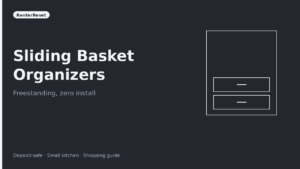
A freestanding sliding basket cabinet organizer is the middle ground: a metal frame that sits on the cabinet floor with baskets that glide out on their own runners. No screws, no tape, nothing touching the cabinet at all. The catch is fit. The frame has to clear your door opening, the face-frame lip and the hinges, or the baskets will not come out far enough to be worth it.
Quick answer / top pick: A two-tier freestanding sliding basket frame at least 1 inch narrower than your door opening, with mesh baskets. It turns a deep base cabinet into two drawers and lifts out whole when you move.
Constraints we optimize for: door opening width vs frame width · face-frame lip · hinge intrusion · basket height vs shelf gap · freestanding frame, no adhesive
Related: shelf risers for small kitchen cabinets · adhesive pull-out cabinet organizers (the stick-on alternative) · lazy susan vs pull-out drawer.
Short list by cabinet
| Cabinet | Pick | Why |
|---|---|---|
| Standard base cabinet, single door | Two-tier freestanding basket frame | Uses the height you usually waste and brings the back to you |
| Under a shelf with a low gap | Single-tier sliding basket | One basket fits where a two-tier frame will not |
| Narrow cabinet or filler gap | Slim sliding organizer | Bottles and sprays in a slot nothing else uses |
| Blind corner | Basket frame in the reachable half only | Do not try to slide something out of a blind run |
| Under the sink | Single-tier basket beside the pipes | Pipes kill two-tier frames; measure around the trap |
Measure the opening, not the cabinet
- Door opening width at the hinge side, door fully open. This, not the cabinet box, is the max frame width. Leave about 1 inch.
- Face-frame lip: if your cabinet has a frame around the opening, the baskets must slide out above it. Measure the lip height and compare it with the basket bottom on the listing.
- Depth: cabinet floor from the front edge to the back wall or pipes. Most frames are shallower than a 24-in base, which is fine; the point is the baskets reaching the front.
- Height: floor to the underside of the shelf, or to the sink trap. Two-tier frames need more than you think once the top basket is loaded.
- Hinges: open and close the door with the frame in place before loading. Hinge cups often clip the top basket on one side.
Freestanding vs adhesive vs screw-in
Freestanding frames sit on the floor and are held in place by their own weight and whatever you load into them. They are the only truly zero-trace option, and they move with you.
Adhesive pull-outs stick their runners to the cabinet floor. Faster to level, but the tape can lift laminate when it comes off. If you go this way, see the adhesive pull-out guide for removal tips.
Screw-in units are the strongest and the smoothest. They are also holes in your landlord’s cabinet floor, so they are out unless you have written permission.
What goes in which basket
Bottom basket: heavy and tall. Pots, colanders, big bottles. Top basket: light and frequent. Food storage lids, sponges, small bottles, bags. If the top basket gets heavy, the frame gets tippy when you pull it fully out, so keep the weight low.
Pair from the RenterReset shop
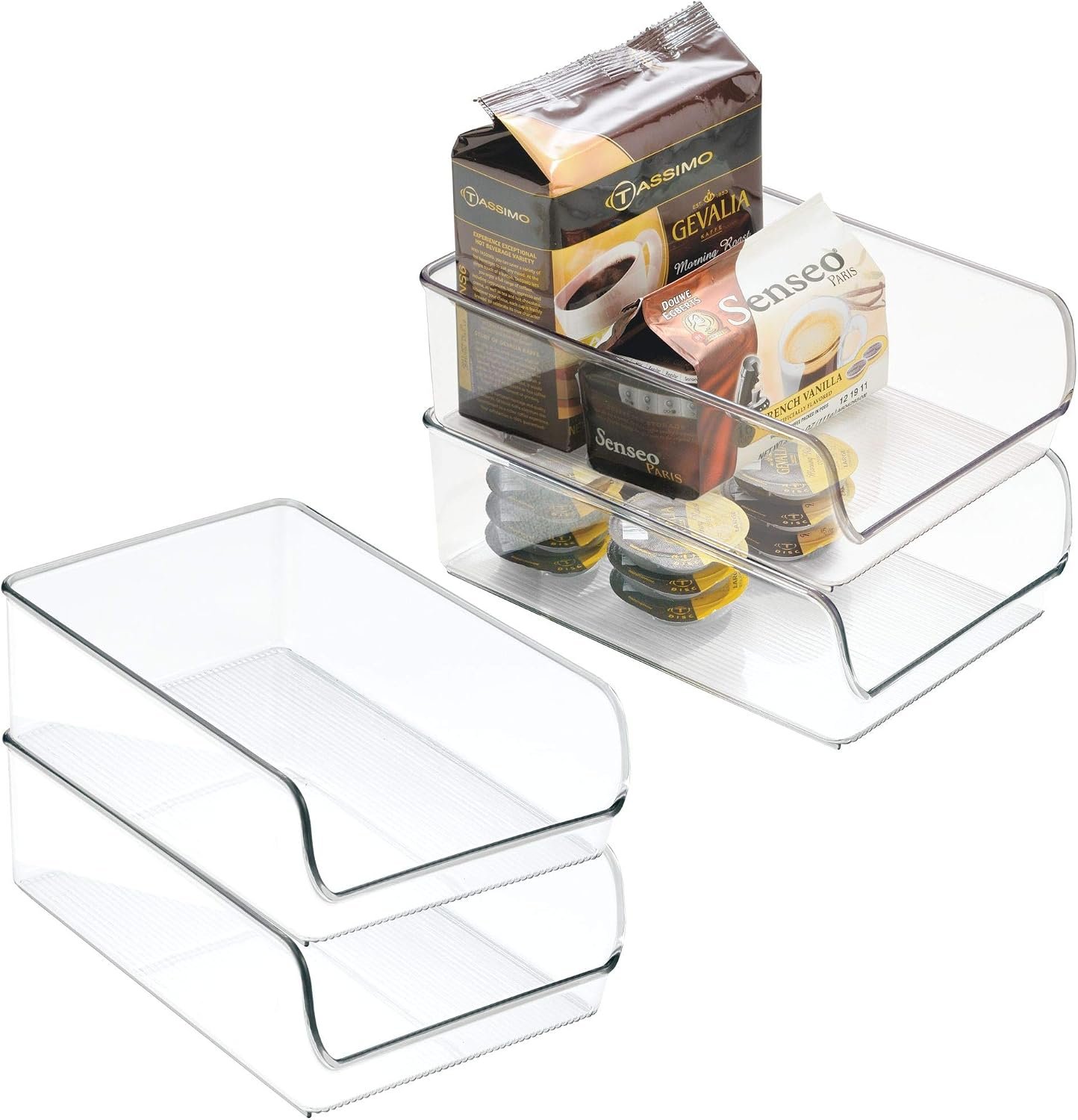
Stackable clear pantry bins (4-pack)
iDesign Linus bins corral snacks in deep cabinets so nothing gets lost in back.
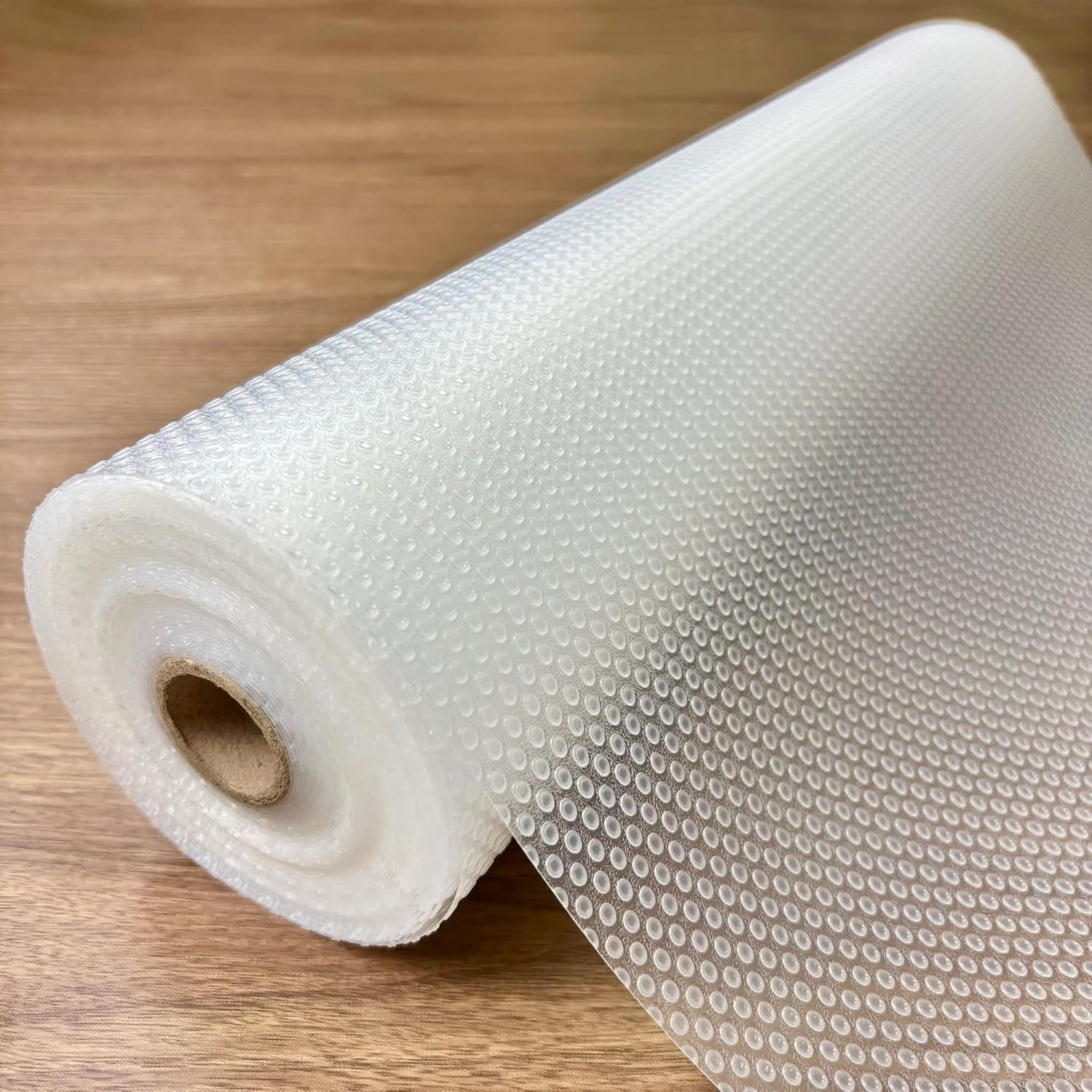
Non-slip shelf liner roll
Cushion plates and stop sliding pans—cut to fit, peel out at move-out.
Fit checks for a frame that slides
- Frame width = door opening at the hinges minus about 1 inch.
- Check the face-frame lip against the basket bottom before you buy.
- Look for the word freestanding or no installation on the listing, not just no drilling.
- Lay a non-slip liner under the frame so it does not walk forward when you pull.
- Heavy items in the bottom basket, light in the top.
- Pull each basket out fully, empty, and close the door once before loading.
Sliding basket picks
1) Two-tier freestanding sliding basket frames
Who it’s for: Standard base cabinets with a single door.
Price band: roughly $25-50
Pros: Two drawers in one cabinet; no install; moves with you. Cons: Needs real height; the top basket can clip hinges.
Fit notes: Measure the door opening at the hinges and pick a frame at least 1 inch narrower.
Shop: two-basket sliding cabinet organizer · 2-tier sliding basket organizer
2) Single-tier sliding baskets
Who it’s for: Low gaps, under-sink, or the space under a fixed shelf.
Price band: roughly $15-35
Pros: Fits where two tiers do not; simplest frame to level. Cons: Only one level of storage.
Fit notes: Basket height plus runner height has to clear the shelf or trap above it with fingers to spare.
Shop: sliding basket drawer for cabinets · mesh pull-out basket
3) Slim sliding organizers
Who it’s for: Narrow cabinets, filler gaps and the slot beside the dishwasher.
Price band: roughly $20-40
Pros: Uses a gap nothing else fits; great for sprays and oils. Cons: Tall and narrow means tippy if overloaded at the top.
Fit notes: Confirm the listing says freestanding; many slim units expect screws or tape.
Shop: narrow slide-out cabinet organizer · slim rolling pull-out basket
4) Liners and bins that keep it tidy
Who it’s for: Anyone putting a frame on a laminate or wood cabinet floor.
Price band: roughly $10-25
Pros: Liner stops the frame skating; bins stop small things falling through mesh. Cons: Liner needs trimming.
Fit notes: Cut liner to the frame footprint, not the full cabinet, so it stays flat.
Shop: non slip shelf liner · clear pantry bins
FAQ
Do sliding basket organizers need to be installed? Not the freestanding kind. The frame sits on the cabinet floor and the baskets slide on runners built into it. Adhesive and screw-in types do need installing.
Will a sliding basket fit through my cabinet door? Only if the frame is narrower than the opening at the hinges, with the door fully open. Measure there, not the cabinet box, and leave about an inch.
Can I use a sliding basket organizer under the sink? A single-tier one usually fits beside the pipes. Measure around the trap first; two-tier frames rarely clear it.
Next in this cluster
- shelf risers for small kitchen cabinets (cluster guide)
- add a shelf without drilling (previous guide)
- corner shelf risers (next guide)
- adhesive pull-out cabinet organizers
- Shop pantry picks
Bottom line
Measure the opening at the hinges, check the face-frame lip, and buy a frame that says freestanding. That is most of the decision. Pull-outs that stick on are covered in the adhesive pull-out guide; for shelves rather than drawers, go back to the shelf risers cluster guide or on to corner shelf risers.

1 thought on “Best Freestanding Sliding Basket Cabinet Organizers (No Install)”